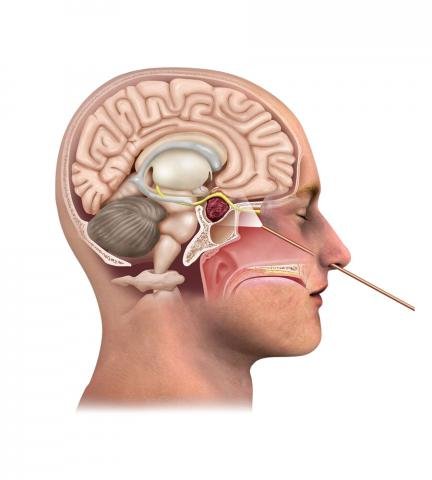
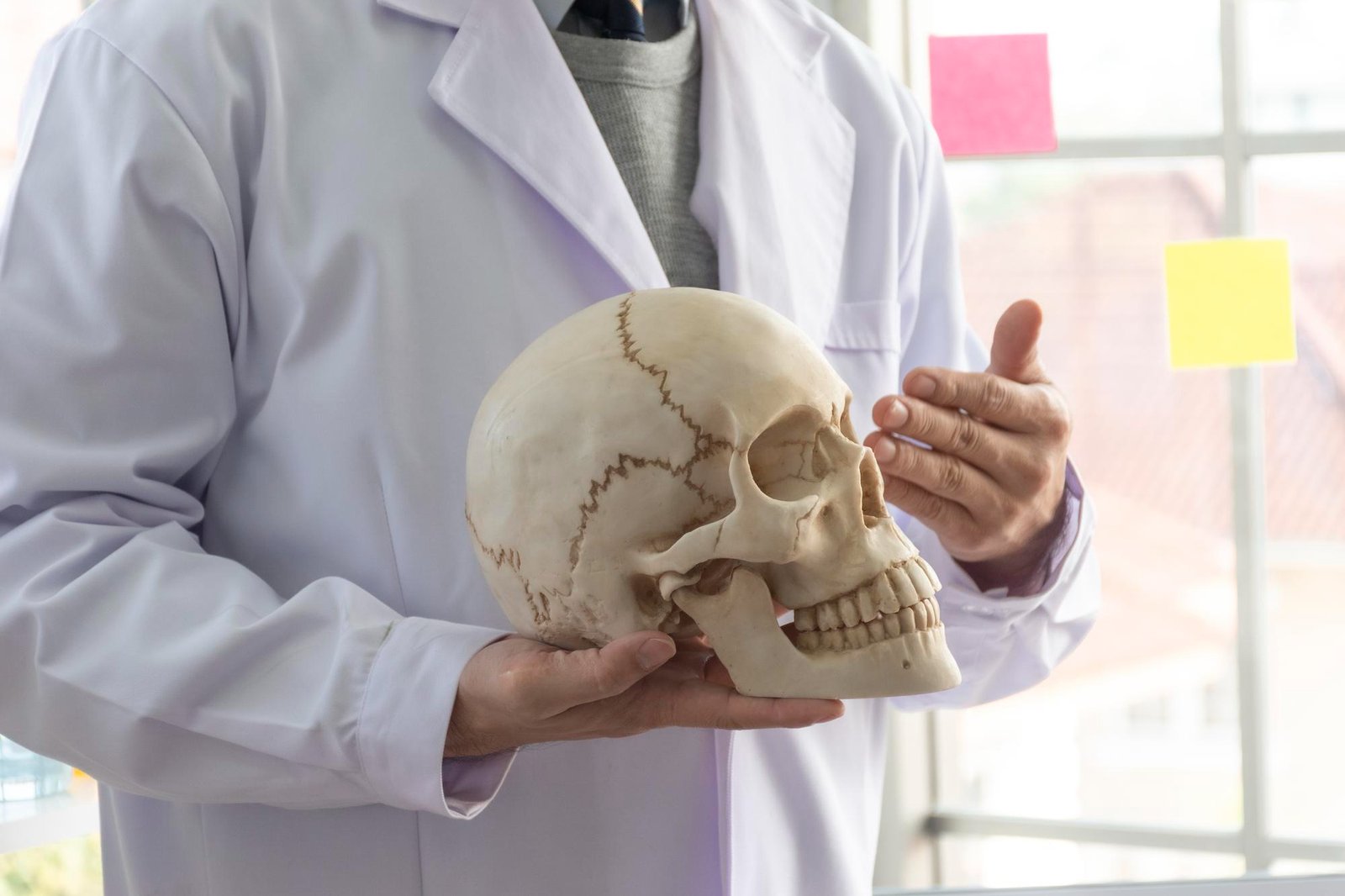
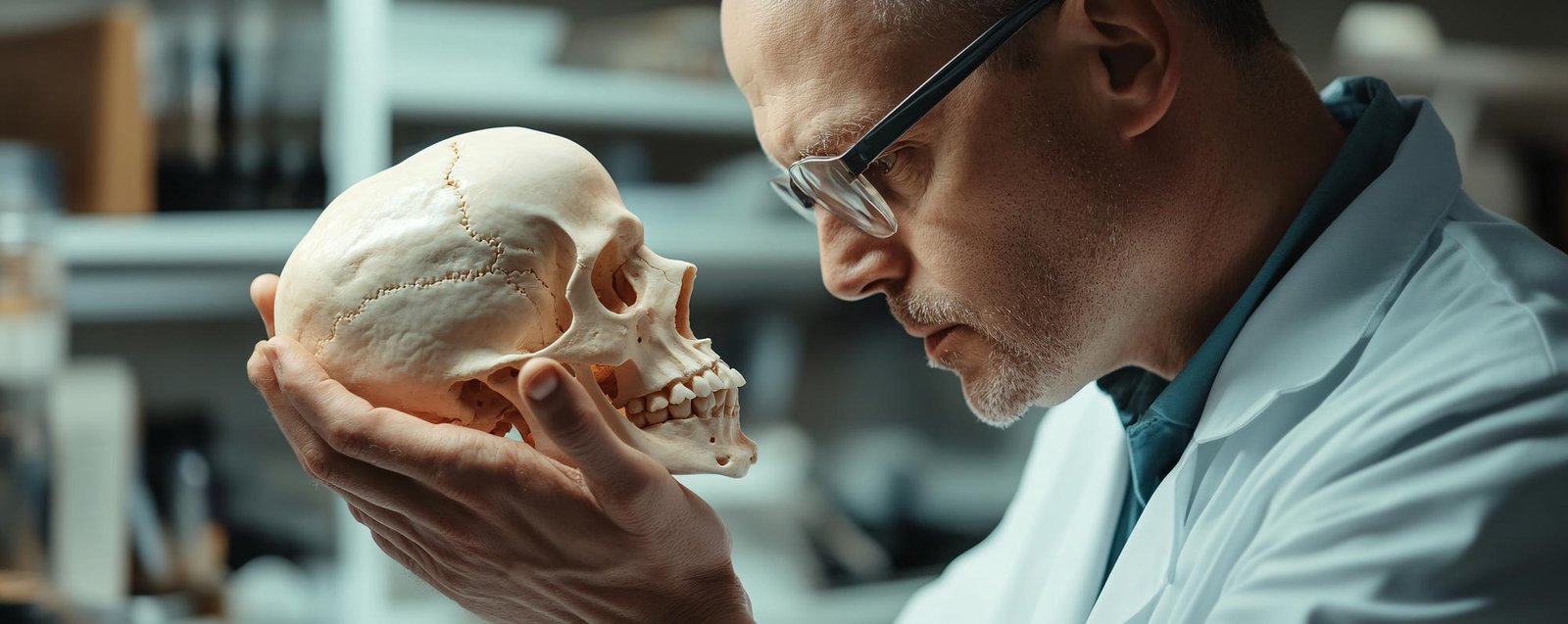
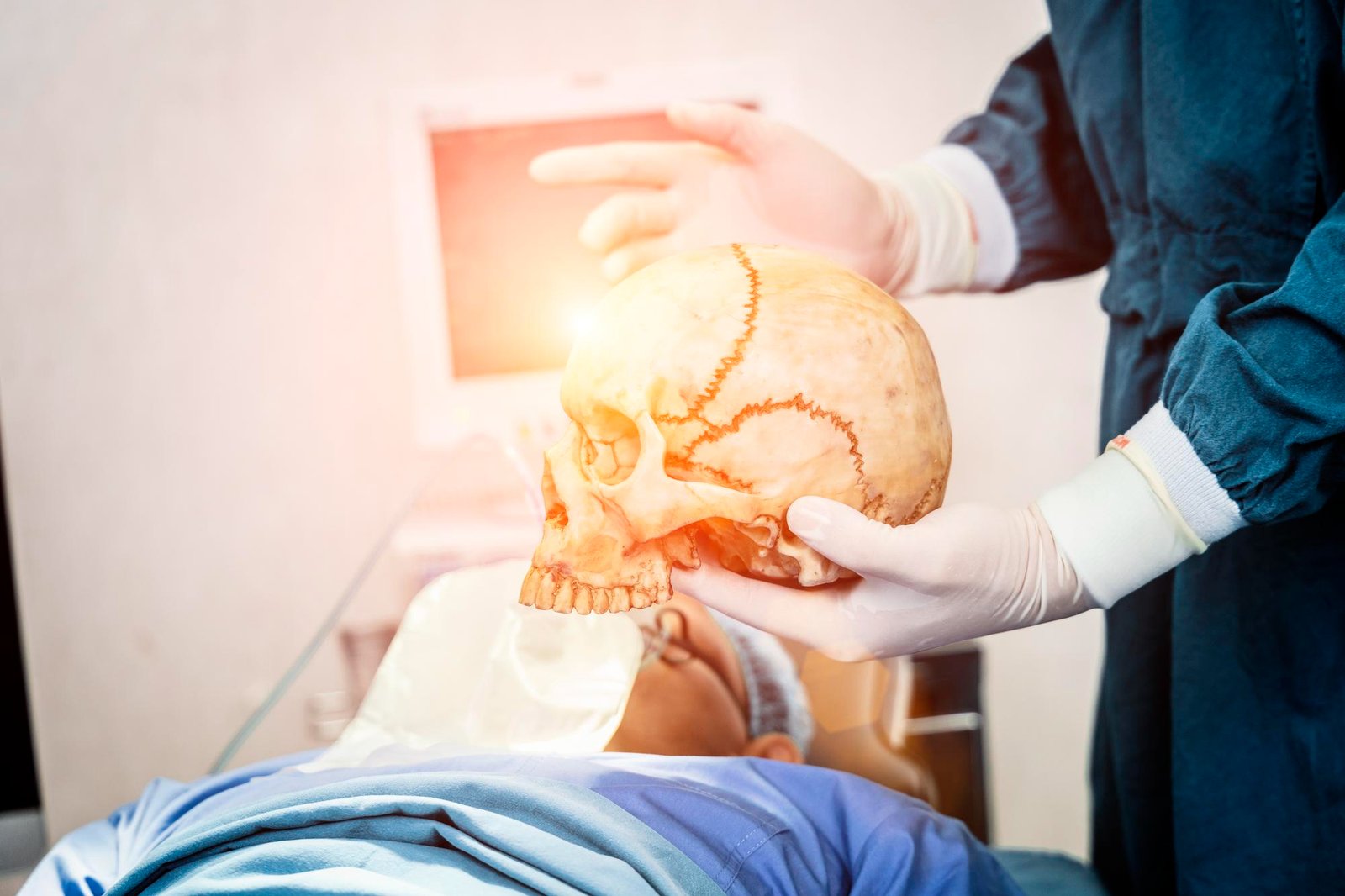
Skull Base Surgery is a highly specialized procedure designed to treat tumors and abnormalities located at the base of the skull and near critical brain structures. These areas are challenging to access due to their proximity to vital nerves and blood vessels.
Skull base surgery is used to remove benign and malignant tumors, vascular malformations, pituitary tumors, and congenital defects while preserving essential neurological functions. The goal is to achieve complete tumor removal with minimal risk and maximum preservation of brain and nerve function.
Before surgery, patients undergo advanced diagnostic imaging, including MRI, CT scans, and angiography, to create a 3D map of the skull base and surrounding structures. A multidisciplinary team of neurosurgeons, ENT surgeons, and radiologists collaborates to design the safest surgical approach—either traditional open or minimally invasive endoscopic.
This careful planning ensures accurate targeting of the lesion while minimizing damage to surrounding tissues.
Modern skull base surgeries use microsurgical instruments, endoscopes, and neuronavigation systems to achieve maximum precision. Depending on the case, approaches like endonasal endoscopic surgery or craniotomy are used to access deep-seated areas through small openings.
With the help of intraoperative monitoring, surgeons can protect vital structures such as cranial nerves, blood vessels, and brain tissue—ensuring safe and effective outcomes.
Following skull base surgery, patients receive specialized post-operative care, including ICU monitoring, rehabilitation therapy, and follow-up imaging to track recovery and detect any recurrence.
Recovery plans are customized to help patients regain strength, manage neurological symptoms, and improve quality of life. With advanced surgical techniques and a multidisciplinary approach, skull base surgery offers excellent results, reduced complications, and a faster return to normal activities.